AI agent development
Hands-on development of AI agents — language models that use tools to complete multi-step tasks, built with narrow permissions, measurable quality, and operations that hold up day to day.

Tools and frameworks we use
- Claude Agent SDK
- Anthropic API
- OpenAI Responses API
- Azure AI Foundry
- Model Context Protocol (MCP)
- Structured output and JSON Schema
- Playwright MCP
- Stagehand
- TypeScript and Zod
- Evaluation and guardrails
What an AI agent is — and what it isn’t
An AI agent is a language model that can use tools to complete a task: read a document, look something up in a system, drive a browser, or prepare a draft for a person to approve. What separates an agent that works from one that impresses in a demo is rarely the model. It is the tools it is given, the boundaries around them, and how quality is measured.
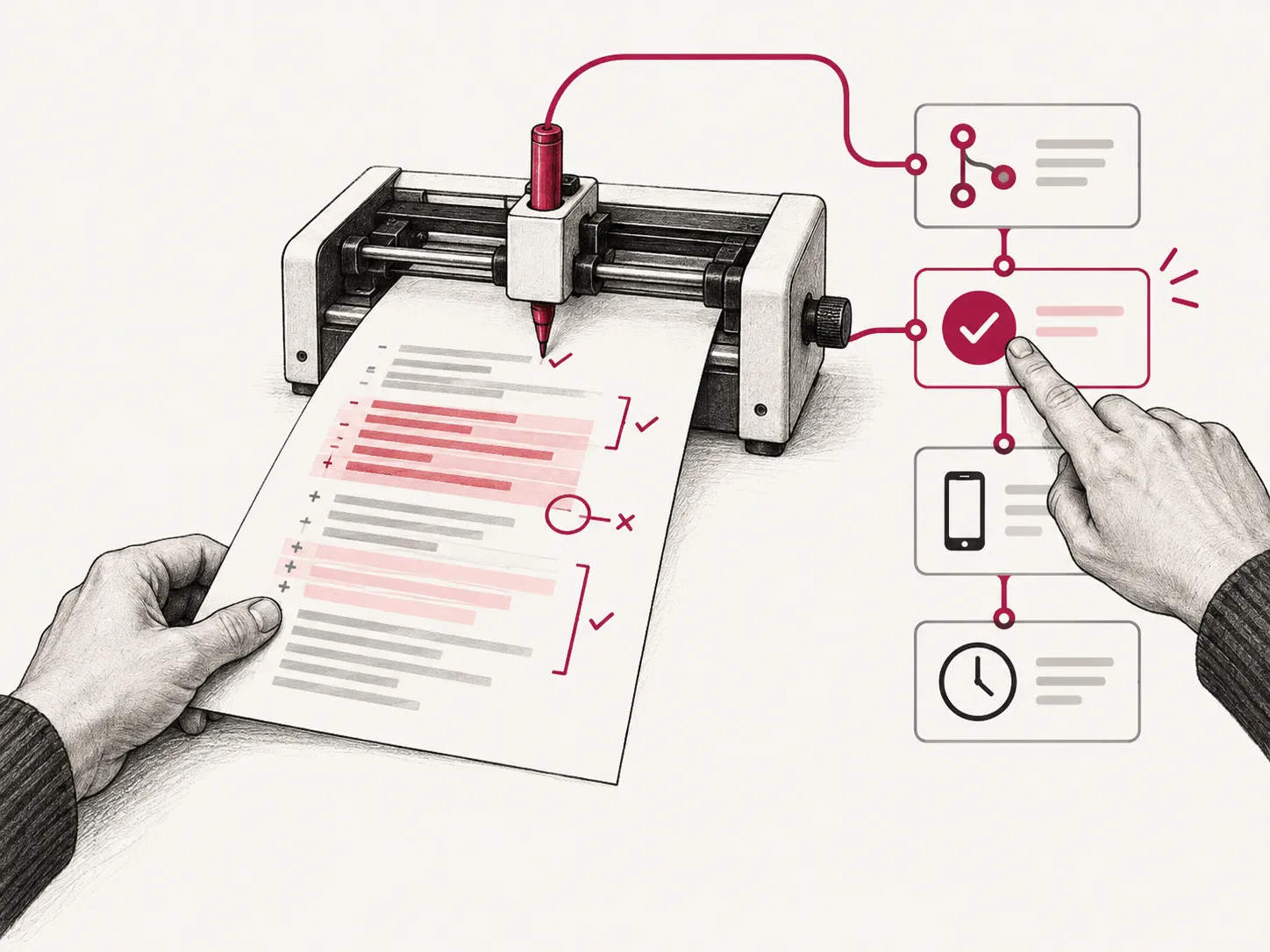
We have built an AI assistant for a development team that reviews pull requests and drafts changelogs, a personal assistant agent that works over iMessage and email with access to tools, and an agentic assistant for accounting work with an audit trail and read-only integrations.
The architecture behind an agent that holds up in production
- Narrow, typed tools. Each tool does one thing, has a clear schema, and validates input with Zod or similar. We often expose them as MCP servers so they can be reused by several agents and clients.
- Structured output. Where the result is used further, for example as comments on a pull request, the agent responds in a defined JSON format rather than free text.
- The model behind an interface. Calls to Claude, OpenAI, and Azure AI Foundry go through one layer, so models can be swapped and compared without changing the agent logic.
- Evaluation as code. A set of real examples runs on every change to instructions or model, so we can see whether quality goes up or down.
- Logging, cost, and approval. Every tool call is logged with its input and result, token usage is tracked per task, and actions that change something wait for a person.
Claude, OpenAI, and Azure AI Foundry
We work with Claude through the Anthropic API and the Claude Agent SDK, with the OpenAI Responses API, and with both OpenAI and Anthropic models deployed in Azure AI Foundry. Foundry is a good choice when data must be processed within the organisation’s own cloud agreement and access controls. For agents that need to use websites, we have experience with browser automation through Playwright MCP and Stagehand.
If you are still working out where AI can add value, the AI and automation service is a better place to start.
Typical engagements
Agents in the development workflow
Pull request reviews and draft changelogs, run in the team’s CI and assessed by developers before anything is published.
Assistants with tools
Agents that read email, look things up in systems, and propose actions — read-only by default, with approval before anything changes.
MCP servers for your systems
Controlled tools that let Claude, ChatGPT, and internal agents use your APIs and data, with access control and logging.
From prototype to production
We take an agent that works in a demo and add evaluation, error handling, cost control, and observability so it can be used every day.
Relevant experience
Projects and open-source work where the technology has been used in practice.
Frequently asked questions
What is the difference between an AI agent and a chatbot?
A chatbot answers questions. An agent can also use tools — look up data, call APIs, or drive a browser — to complete a task in several steps.
Which language models do you use?
Among others, Claude from Anthropic and models from OpenAI, directly or through Azure AI Foundry. We build agents so the model can be swapped without rewriting the rest of the solution.
How do you stop the agent from doing something wrong?
The agent gets as few and as narrow tools as possible, starts read-only, and every action is logged. Changes require human approval, and we evaluate the agent on real examples before it is put to use.
What is MCP?
The Model Context Protocol is an open standard for giving AI models access to tools and data. We build MCP servers that let agents use your systems in a controlled way.
We don’t yet know where AI can help us. Is this the right page?
Then the AI and automation service is a better fit. There we start by mapping the workflow and finding the tasks where AI adds measurable value. This page is about the build itself once the task is chosen.
Related technologies
Part of the service: AI and automation
Need help with AI agents and LLMs?
Tell us briefly about the product, the team, or the system. We will respond with a practical suggestion for the next step — a complete delivery, senior capacity in your team, or technical advice.
- Phone
- +47 920 50 946
- Location
- Oslo, Norway