Canary: alerts when bitcoin in cold storage moves
Bitcoin in cold storage is rarely checked. Canary is an open-source service from Schjønhaug AS that monitors wallets without access to the keys and alerts you the moment something happens.
Most people who hold bitcoin long term keep it in cold storage — on a hardware wallet or in a multisig setup that is rarely online. That is safe, but it also means nobody is watching. If funds move without the owner knowing, it can take a long time before anyone notices.
Canary is an early warning system for exactly this: a canary in the coal mine for wallets that are seldom checked.
Monitoring without access to the keys
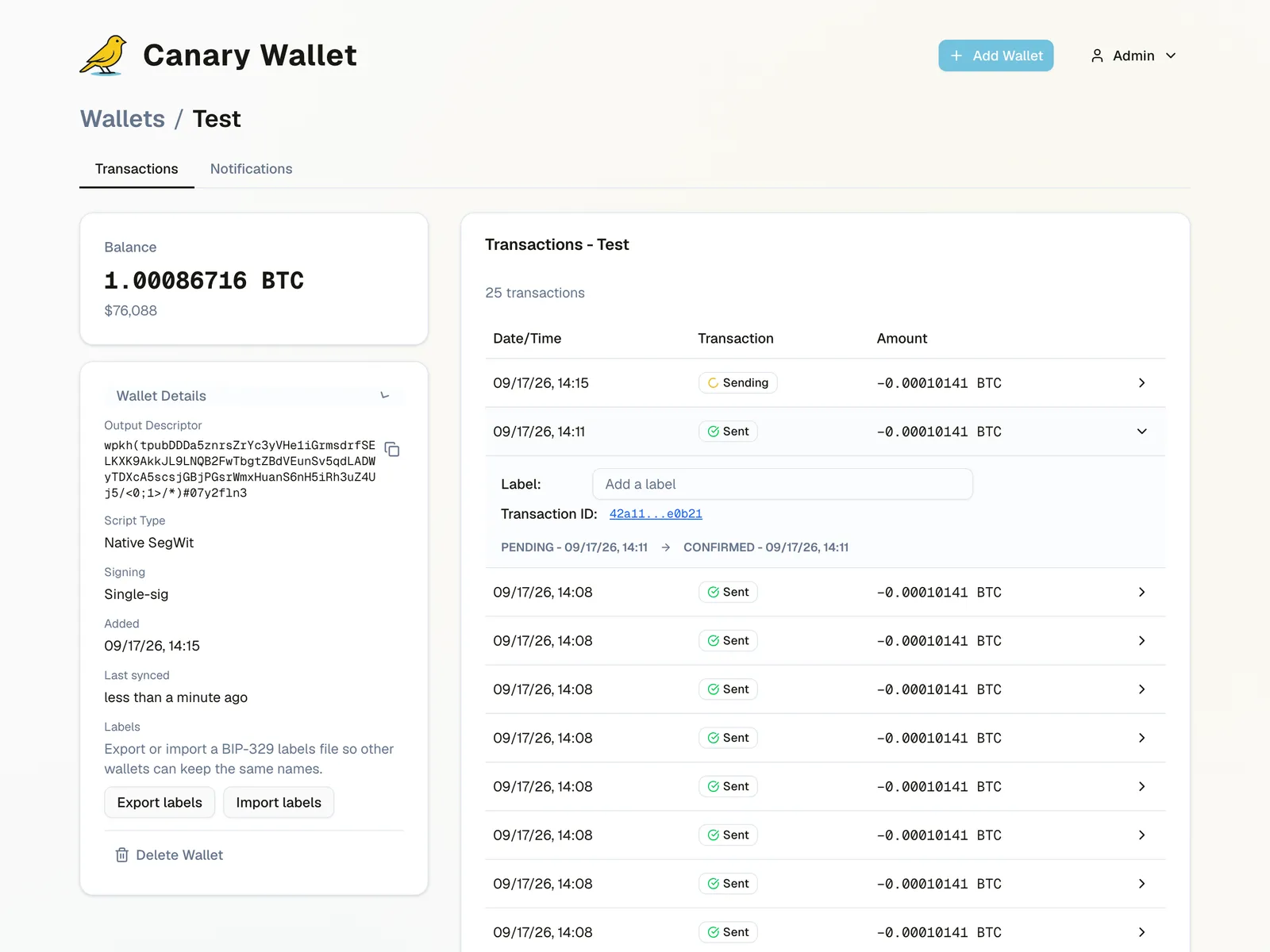
Canary never needs private keys or recovery phrases. The user adds an output descriptor, an xpub, or individual addresses from wallets such as Sparrow, BlueWallet, Electrum, Coldcard, Ledger, and Trezor, and Canary watches the chain. Both single-sig and multisig are supported.
The service notifies about sent and received transactions, confirmations, and fee bumps using RBF and CPFP. Users can also set balance thresholds in bitcoin or local currency, with logic that prevents the same event from triggering a stream of alerts.
Rust, BDK, and Next.js
The backend is written in Rust with Axum and Tokio, and uses the Bitcoin Dev Kit (BDK) and Electrum to sync wallets. Data is stored in SQLite. The frontend is built with Next.js, React, and Tailwind CSS, and the whole product is translated into nine languages.
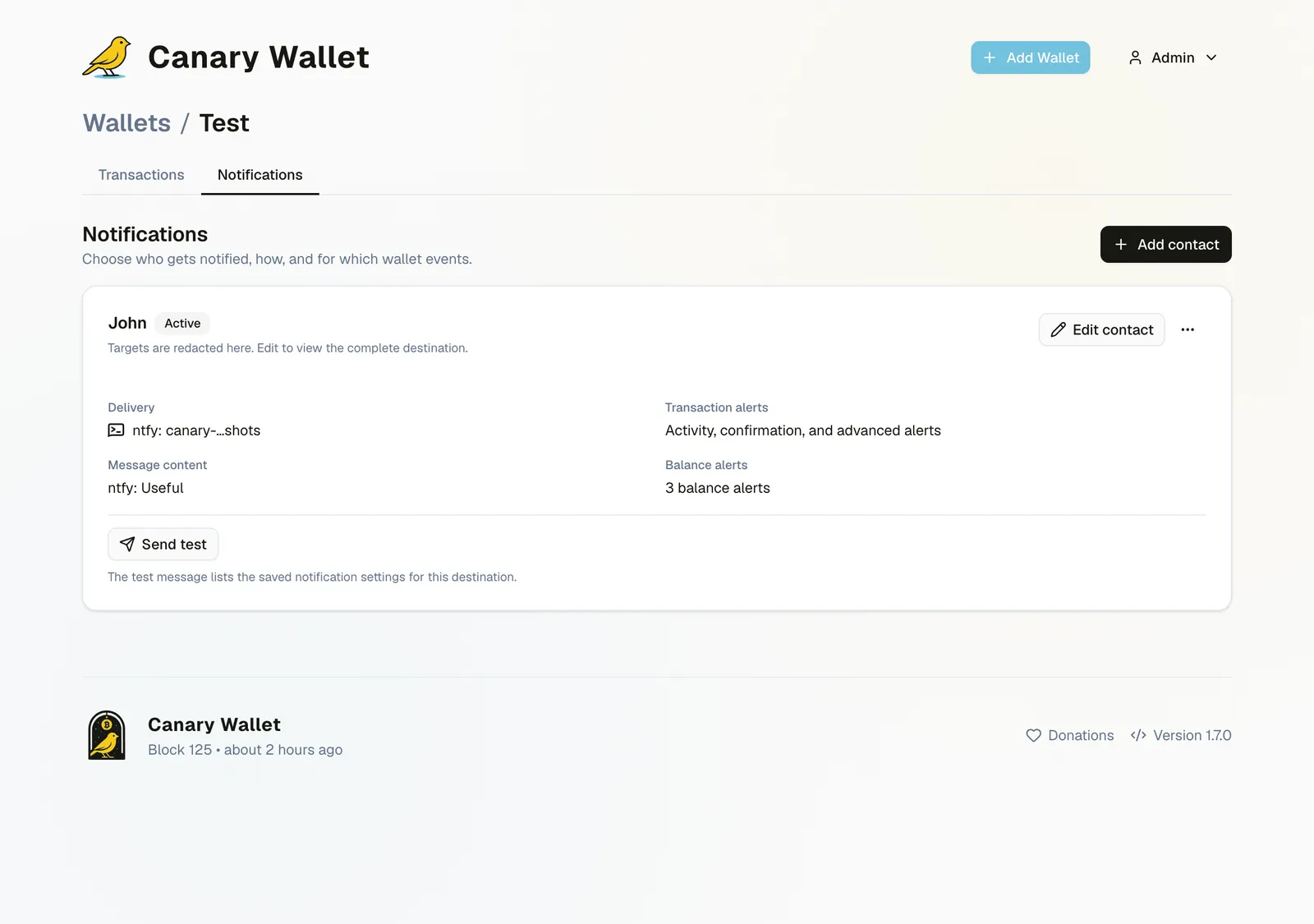
Alerts are delivered via ntfy, encrypted Nostr messages, webhooks, and Telegram. The hosted version at canarybitcoin.com adds multi-user sign-in, subscriptions, and email and SMS alerts.
Self-hosting as a first-class option
Many bitcoin users want to run software themselves. Canary is therefore shipped as a Docker image and as ready-made packages for Umbrel, StartOS, and myNode, and can connect to the user’s own node. The code is open on GitHub.