Innovative speech-to-text solution for the police
In recent years, the Norwegian police have worked purposefully with digitalisation and investment in AI-driven innovation. In cooperation with the police and NTNU, and with support from the Research Council of Norway, Schjønhaug AS carried out the AI4interviews project to make police work more efficient through pioneering speech-to-text technology.
Written by Maria Vole

The police have a substantial workload and a busy working day. Automating time-consuming and repetitive work can therefore be highly beneficial. According to the police, around 150,000 interviews are conducted in Norway every year, and transcribing them takes a great deal of time for investigators and other police employees. Wanting to explore the practical use of artificial intelligence in digital police work, the police contacted Schjønhaug AS.
Andreas Schjønhaug has worked on the Benevis transcription tool since 2018. Using machine learning, Benevis makes it possible to convert audio files to text automatically. Experience from earlier work with NRK and the National Library of Norway formed the basis for developing a tailored speech-to-text solution for the police. The project aimed to make police interviews more efficient by developing and adopting AI solutions for speech-to-text and text analysis.
“Transcription takes a very long time—one hour of audio can take up to a full working day to transcribe. Assistance from AI saves both time and money,” says Schjønhaug. “I find it exciting that the police are forward-looking and want to explore new technology. Making daily tasks more efficient can help more cases move forward faster.”
Promising results
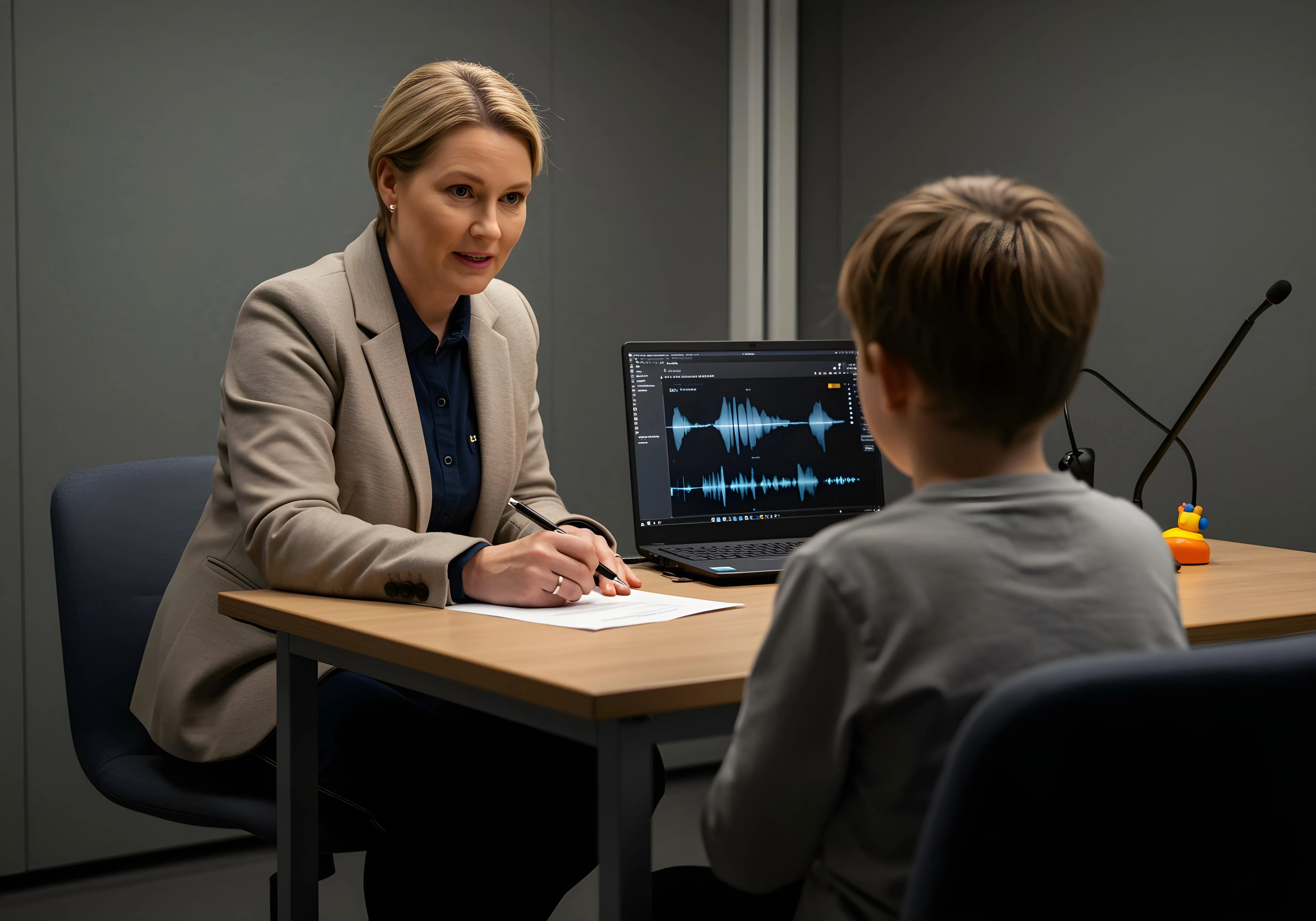
Every police interview results in an audio or video file that must be processed. AI4interviews performs the groundwork by producing a transcript that police employees can review and correct. The solution can also assist with text analysis, summaries, reports, and other language-related tasks.
The police brought extensive expertise and experience in interviews and transcription, which proved invaluable while developing the solution. Several internal tests evaluated the speech-to-text model’s performance and accuracy and gathered users’ views of the tool.
Schjønhaug says feedback from the people who would use the solution every day was an essential part of the design process. His team worked closely with police transcriptionists to map their needs and tailor the solution. “The purpose was to make their work easier,” he says.
According to Bente Skattør, senior ICT adviser with the police, the project has been very promising. “Throughout the project, we have focused on letting the users determine whether the solution works well,” she says. “It has been a valuable and educational collaboration for everyone involved.”
The result was a tailored tool that is both useful and resource-efficient. Because police investigators often do the transcription themselves, AI technology can free significant time and resources for the investigation itself. Documentation and reports can be produced faster, allowing police employees to apply their expertise to following up cases.
“There is no doubt that these innovative tools can help us make enormous progress,” says Skattør. “The solution is flexible, well adapted to our needs, and can help police work be carried out better and faster.”
In addition to practical feedback about the solution, users highlighted a positive side effect of the AI technology. The police conduct specially facilitated interviews with children, young people, and vulnerable adults when investigating sensitive cases involving violence and sexual abuse. Employees must work intensively with the audio or video they transcribe and can become closely exposed to distressing accounts that are difficult to hear.
“It is hard to understand how demanding it is to work with cases like these—some people experience secondary trauma,” Skattør explains. The AI solution provides a completed first transcript, helping police transcriptionists with the most taxing part of the work. In this way, the police can save not only time and resources but also reduce the psychological burden on employees.
A focus on innovation
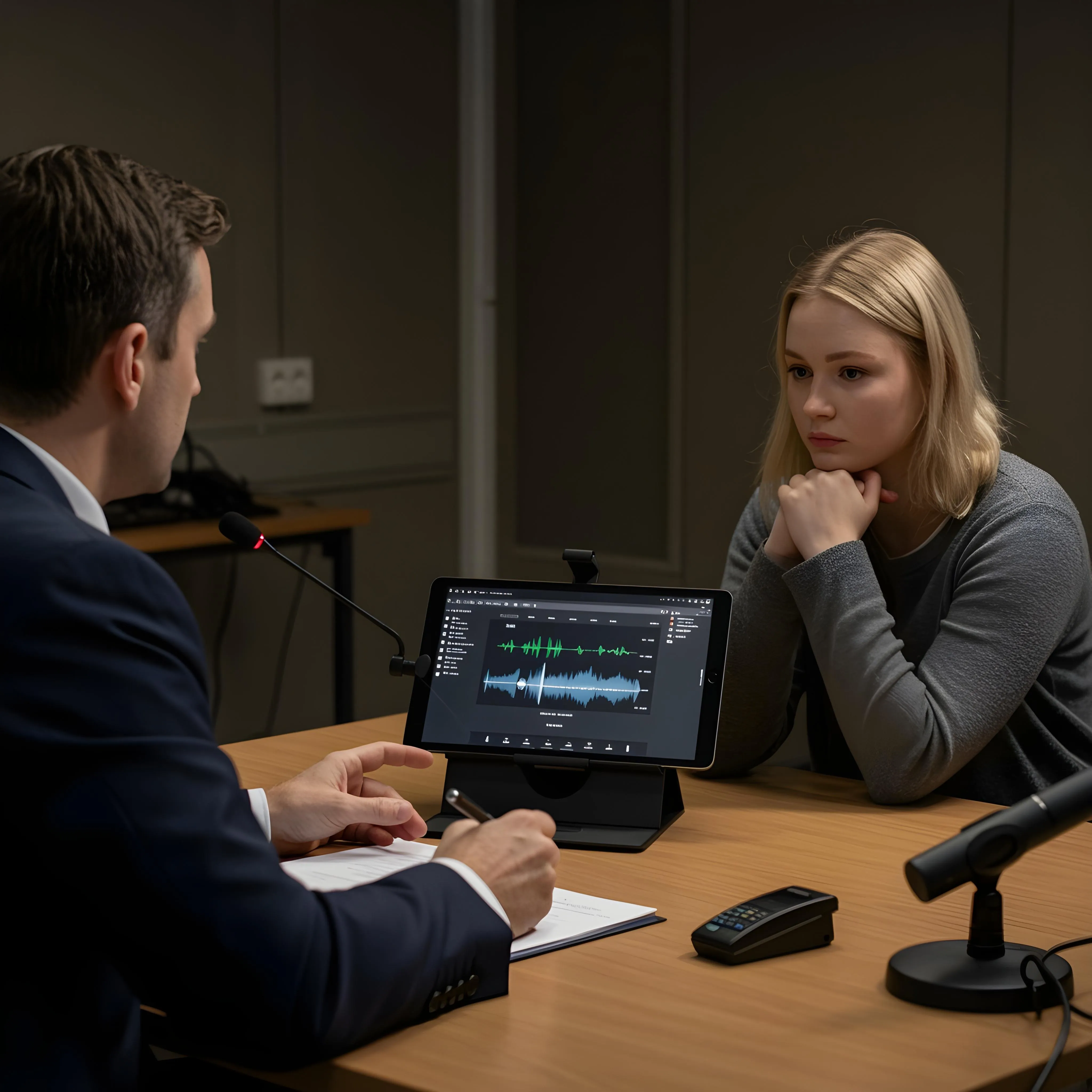
Development moves incredibly quickly in the digital world, and criminals are often early adopters of new technology. It is therefore important for the police to keep pace. “The police will benefit from working more proactively, and innovation and digitalisation are important ways to keep up with technological development,” says Skattør. “We create innovation by doing, testing, and learning, and that is exactly what we have done in this project.”
AI-powered technology has enormous potential to improve the efficiency and quality of operational police work, with many more possibilities and applications to explore. In addition to interviews, the police perform many tasks that require language work and documentation, including transcription from court proceedings, meetings, and interpreting services.
Norway is also among the first countries in the world to experiment with AI tools such as voice-controlled body cameras at crime scenes, with encrypted streaming that enables direct communication with police specialists.
“There are significant gains in both working hours and money saved,” says Skattør. “Minister of Justice Emilie Enger Mehl recently visited the police to test the AI equipment and believed that it could save us billions.”
The potential time and cost savings from the AI investments will now be measured carefully, and the police will assess further opportunities to create value. Much suggests that this is only the beginning of an exciting journey—and that its success comes from the expertise and effort of everyone involved.
“Bente has been the driving force behind the project,” says Schjønhaug. “She has been wonderful to work with and has an incredible determination to make things happen. We achieved a great deal in the time we had.”
Skattør agrees that the interaction was both productive and enjoyable. “It has been an incredibly good project and an excellent collaboration,” she says. “I greatly appreciate Andreas. He is exceptional—smart, solution-oriented, and a fantastic team player.”
Benevis is now being discontinued, but the project’s source code has been released as free and open source, allowing others to read, modify, and adapt it to their needs. Making the code publicly available enables further development and collaboration and creates opportunities for innovation. “It is a fitting conclusion to an exciting project,” says Schjønhaug. “We want to give something back, especially because much of the development work was supported by public funding from NRK, the National Library of Norway, and the Research Council of Norway.”